Mal’akh Reveals to Peter That He Is Zachary
The Lost SymbolMal’akh Reveals to Peter That He Is Zachary is the recognition scene that overturns Peter Solomon’s understanding of his family history: the enemy before him is Zachary Solomon, the son he believed had died in a Turkish prison. The revelation makes Mal’akh’s campaign personal in a newly explicit way, linking his revenge to Peter’s earlier choice and exposing the false death on which Peter’s grief rested. While the confrontation unfolds, Katherine Solomon discovers photographic evidence that Zachary may have survived, giving the disclosure a parallel line of confirmation.
The Confrontation and Its Stakes
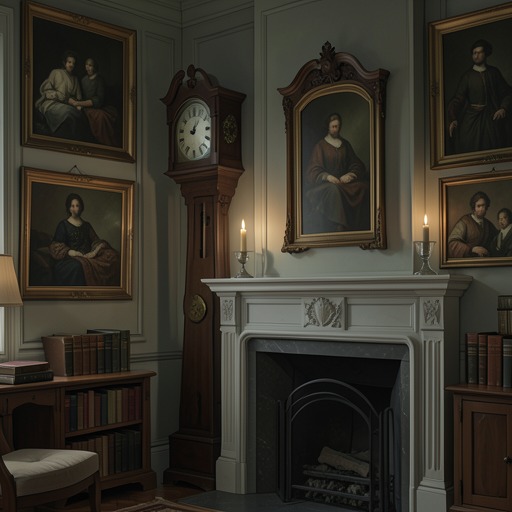
The revelation takes place in the Temple chamber, where Mal’akh has brought Peter as part of his planned final ritual. Mal’akh presents himself as the intended offering and insists that Peter’s role is to transform him. Peter, in turn, understands the demand through the history of violence Mal’akh has inflicted on his family. He believes the man before him murdered his son, his mother, and other members of the family; killing Mal’akh, he says, would not be a punishment. The scene begins with Peter facing an apparent enemy and a coercive demand, but Mal’akh’s disclosure changes the conflict into a confrontation between father and son.
Before naming himself, Mal’akh accuses Peter of having caused the family’s losses. He points to Peter’s refusal to secure Zachary’s release from prison and to the choices Peter had placed before his son: wealth or wisdom, and joining the Masons. He also reproaches Peter for leaving him in prison rather than bringing him home. These accusations reveal the grievance that has shaped Mal’akh’s revenge, while keeping the emotional conflict centered on Peter’s past decision. Peter rejects Mal’akh’s account of why he left Zachary behind, but the accusations unsettle the certainty with which he had understood the son’s fate.
Zachary’s Survival and Reinvention
Mal’akh then identifies himself as Peter’s returning son. He explains that, after Peter refused the prison warden’s demand for money, he offered to pay instead. The warden arranged for a sickly inmate of similar size to be dressed in Zachary’s clothes and substituted for him. The photographs Peter received and the sealed casket he buried therefore belonged to a stranger. Zachary had survived, but his family was led to believe he had been killed.
The escape did not restore Zachary to his former life. He says that he ceased to exist as Peter’s son after deciding that Peter had rejected him, and the account traces a progression through the names Zachary, Andros, and Mal’akh. His physical appearance and voice changed after he used experimental growth hormones and steroids: his adolescent build and youthful face gave way to a much larger frame, altered features, and a permanently whispered voice. The transformation supplied the means for a new identity, but the disclosure makes clear that Mal’akh’s sense of separation from his family began with the decision he attributes to Peter.
Peter’s Recognition and Katherine’s Evidence
Peter’s response marks the reversal at the heart of the scene. He has addressed Mal’akh as the man responsible for Zachary’s death; now he understands that his son is alive and standing before him. He is left pale and tearful as Mal’akh watches the effect of the revelation. For Mal’akh, Peter’s recognition arrives years after the abandonment he describes, and the delayed naming of the truth becomes part of his revenge. For Peter, the sealed casket and his belief in Zachary’s death are suddenly recast as consequences of a deception made possible by his refusal to pay the warden.
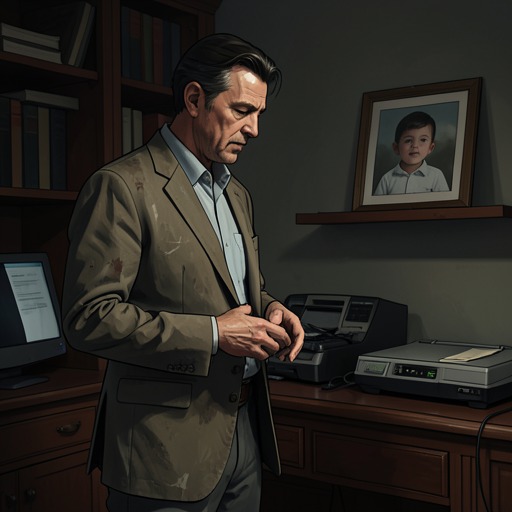
The narrative also follows Katherine and Warren Bellamy as they examine a drawer filled with newspaper clippings about the Solomon family. Among the items are reports on Peter’s successes, Katherine’s research, Isabel Solomon’s murder, and Zachary’s drug use, imprisonment, and reported death. Katherine finds photographs of Zachary at different stages of his life. One shows him healthy on a beach and bears a date almost a year after the date of his supposed death. The later images appear to chart a gradual transformation, including changes in his build and face and the first traces of tattoos. Katherine recognizes that the photographs do not match her memory of her nephew, but their dates and sequence support the truth being revealed in the Temple chamber.
Consequences and Significance
The scene replaces a presumed death with a survival concealed by substitution, and turns Mal’akh’s identity from a disguise into the visible continuation of a broken father-son relationship. Its two strands of evidence—the confession to Peter and the dated photographs found by Katherine—converge on the same reversal. The photographs do not explain every stage of Zachary’s escape, but their chronology undermines the account the family had accepted and allows the reader to connect Katherine’s discovery with Mal’akh’s disclosure.
The revelation also changes the meaning of Peter’s earlier refusal. Mal’akh treats it as the moment Peter rejected him, while Peter maintains that Mal’akh does not understand why he made that choice. The scene exposes this unresolved difference without resolving the dispute over Peter’s motives. What it establishes decisively is that Zachary survived the prison, the reported death was staged through a substitute, and the man who has returned as Mal’akh has built his identity around the belief that his father abandoned him.